Why Are Copper Peptides Blue?
September 29, 2026
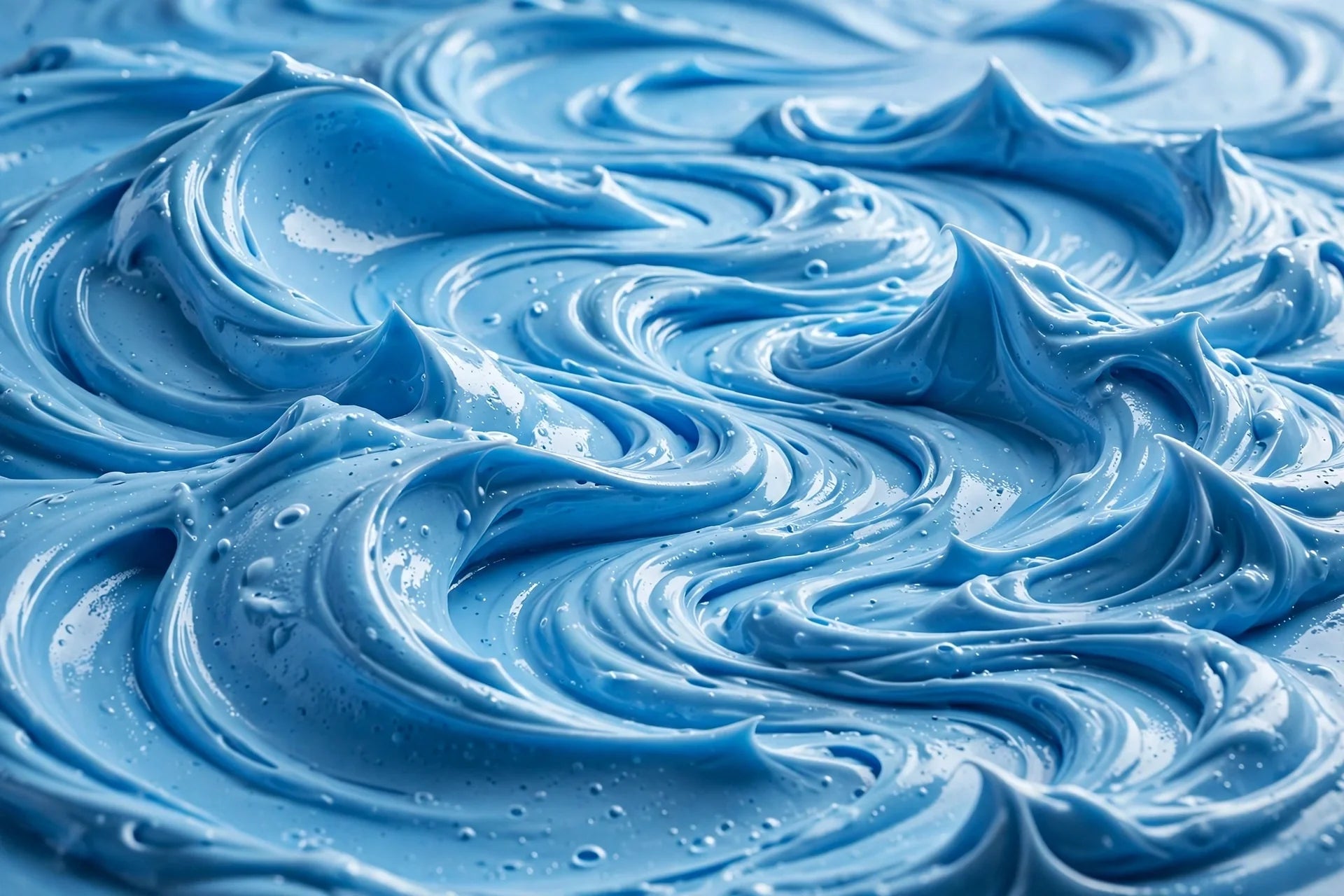
Open a jar of a copper-peptide formula and the first thing you notice isn’t the texture — it’s the color. A vivid, almost electric blue. It’s not dye, not marketing. It’s chemistry you can see.
Copper is blue
When copper ions bind to a peptide chain — as in GHK-Cu or AHK-Cu — the resulting complex absorbs certain wavelengths of light and reflects back that signature blue. It’s the same reason copper sulfate solutions are blue: the metal itself carries the color into whatever it joins.
What the shade tells you
As a rough rule, a deeper blue generally means more copper-peptide complex in the formula, while a pale tint means less. It’s not a precise gauge — base ingredients shift the tone — but the blue is a genuine signal that the active is present, not decoration.
Why it matters for RootMira
Our mask’s vivid blue cream is the AHK-Cu itself showing up for work. No added color needed — the peptide announces itself. (It rinses clean, for the record.)
Try it: The RootMira AHKCU Copper Peptide Hair Mask — vivid blue, copper-peptide powered, with shea butter, coconut oil, rosemary, and aloe.
RootMira products are cosmetics, not medicines. This article shares general ingredient information, not medical advice.
RootMira's mask is built around AHK-Cu, the copper peptide for hair. See the mask →