Ceramides for Hair: What the Research Actually Says About the “Cuticle Cement” Claim
November 3, 2026
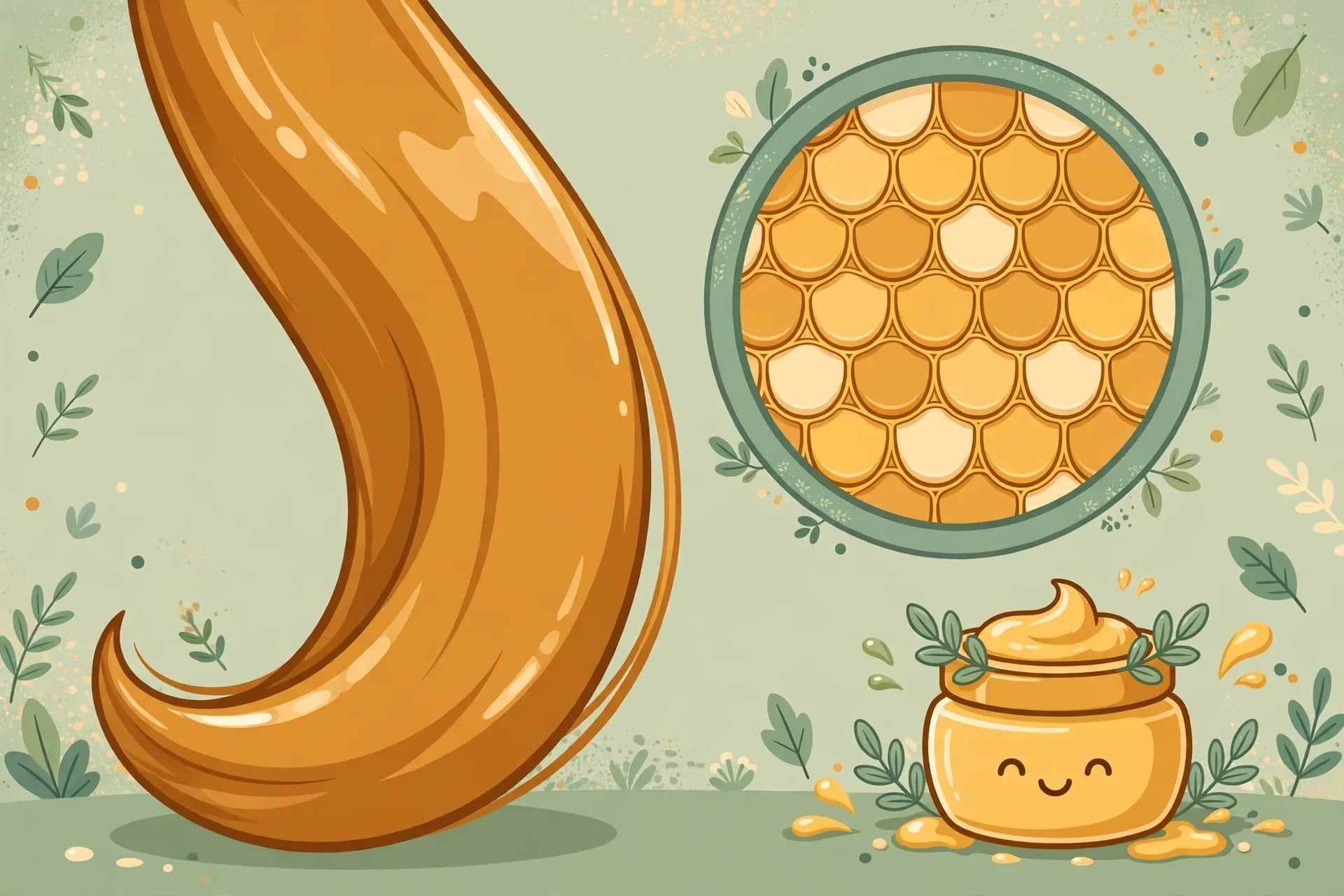
Ceramides are increasingly appearing in hair masks, conditioners, and products marketed for damaged hair. Their selling point sounds convincing: ceramides supposedly act like cement between hair cuticle cells, replacing lost lipids and rebuilding damaged strands.
There is legitimate science behind the analogy. But does adding ceramides to a conditioner actually reconstruct damaged hair? The answer is more complicated than the marketing suggests.
Research supports ceramides’ structural importance in hair fibres, while experimental cosmetic studies suggest certain ceramide-containing formulations can improve combability, surface smoothness, and mechanical performance. Evidence for permanent structural restoration, however, is much weaker.
What Exactly Are Ceramides?
Ceramides are a family of fatty molecules called sphingolipids. They consist of a sphingoid backbone connected to a fatty acid. Unlike a single ingredient, ceramides include numerous molecular structures with different fatty-acid chains and chemical properties.
In human hair, ceramides form part of the lipid-rich cell membrane complex (CMC), which helps connect neighbouring cuticle and cortex cells. Think of the overlapping cuticle cells as roof shingles — the CMC acts partly like the material holding those shingles together. Importantly, the CMC contains proteins and multiple lipid classes, not ceramides alone.
Robbins described the CMC’s distinct structural components and their roles in hair-fibre cohesion (Robbins, Journal of Cosmetic Science, 2009). A systematic review examining 59 studies also identified hair lipids as contributors to fibre hydration, permeability, elasticity, and mechanical properties (Csuka et al., International Journal of Dermatology, 2023).
Reading ingredient labels: Ceramide NP, Ceramide AP, and Ceramide EOP refer to different ceramide structures. Ceramide-like ingredients, including cetylhydroxyproline palmitamide, are designed to imitate certain properties of naturally occurring ceramides. Their appearance on an INCI list identifies their presence — not their concentration, deposition efficiency, or demonstrated performance.
How Does Hair Lose Its Natural Lipids?
Hair fibres accumulate damage through repeated environmental, chemical, and mechanical exposure. Bleaching and chemical straightening can disrupt cuticle structures and alter their associated lipids. Heat styling damages keratin and cuticle structures, although that does not establish that every heat-related change involves ceramide depletion.
Sunlight also affects hair lipids. Ross and colleagues investigated hair samples exposed to ultraviolet and visible light, using mass spectrometry to identify changes in lipid composition. Several ceramide-related molecular species decreased after exposure (Ross et al., International Journal of Cosmetic Science, 2022).
Collectively, these findings support an association between environmental wear and changes in hair lipids. However, lipid depletion is not necessarily the sole cause of roughness, tangling, friction, or breakage — protein oxidation, surface damage, and other structural changes occur simultaneously. Demonstrating lipid loss does not automatically prove that replacing a particular ceramide will reverse all associated damage.
Can Ceramide Conditioners Actually Repair Hair?
One particularly relevant investigation examined lipid-rich liposomes applied to untreated and chemically processed human hair. Méndez and colleagues used liposomes containing natural wool-derived lipids, including ceramides and other lipid components. The researchers reported changes in hair lipid composition following application and improved resistance to fibre breakage, and their findings also suggested improved interactions between structural components within treated fibres (Méndez et al., Journal of Cosmetic Science, 2011).
This provides evidence that certain lipid-containing treatments can improve measurable properties of damaged hair. However, the treatment involved a mixture of lipids, not isolated ceramides — so its effects cannot be attributed exclusively to ceramides.
Another laboratory investigation assessed a synthetic ceramide-2 analog in shampoo and conditioner formulations (Lin et al., Cosmetics & Toiletries, 2018). The researchers measured combing forces, microscopic surface appearance, water-contact angles, and tensile performance. The experimental shampoo containing 1% ceramide analog reduced combing force at certain measurement stages. Conditioner-treated fibres also exhibited smoother-looking cuticles, increased surface hydrophobicity, and higher breaking loads in a small fibre sample.
These are meaningful cosmetic and mechanical measurements. Nevertheless, the work was industry-associated, conducted under controlled conditions, and did not establish long-term structural restoration during ordinary consumer use. A smoother cuticle under microscopy is not necessarily a reconstructed cuticle.
Natural Ceramides Versus Synthetic Alternatives
Natural ceramides may come from biological sources or be produced through biotechnology. Synthetic ceramides and pseudo-ceramides are manufactured to reproduce selected chemical or functional characteristics. One approach is not automatically superior.
The 2018 research discussed above found that a synthetic ceramide analog could improve several hair-conditioning measurements. However, it did not establish that synthetic ceramides consistently outperform naturally occurring ceramides across comparable finished hair products. Performance depends on molecular structure, formulation stability, ingredient delivery, and interactions with other conditioning agents. For consumers, the finished formula matters more than whether a ceramide is marketed as natural.
The Skin-Barrier Evidence Trap
Ceramides have a particularly well-established role in skin. Human skin contains living cells beneath its outer barrier, and ceramide-containing moisturisers have been investigated in controlled human studies. For example, a randomised, investigator-blinded study in people with controlled atopic dermatitis found that a moisturiser containing a ceramide precursor significantly improved skin hydration and reduced transepidermal water loss compared with untreated skin over four weeks (Simpson et al., Journal of Dermatological Treatment, 2013).
But skin and hair fibres are fundamentally different. Human skin studies can measure changes in skin-barrier function, hydration, and transepidermal water loss. Most ceramide-related hair studies, by contrast, examine isolated fibres, treated hair bundles, lipid composition, surface characteristics, or mechanical measurements. The visible hair shaft consists largely of dead keratinised material — it cannot biologically regenerate damaged cuticle cells. Therefore, successful skin-barrier research cannot be presented as proof that ceramides permanently rebuild hair.
Rinse-Off Versus Leave-On: Does Contact Time Matter?
Contact time influences the opportunity for cosmetic ingredients to interact with hair. Shampoos typically remain on hair briefly, while conditioners and masks may be applied for several minutes; leave-on formulations remain until subsequent washing. Longer contact can provide additional opportunity for deposition, but does not guarantee greater penetration or better performance — ingredient chemistry and the complete formulation remain critical.
Some conditioning materials attach to the hair surface through hydrophobic interactions or other molecular forces; others may distribute differently depending on fibre damage and formulation. Deposited material can gradually diminish through washing and mechanical wear.
Importantly, a study testing 1% ceramide analog in an experimental conditioner does not establish that a commercial mask contains the same concentration — or delivers equivalent results. Likewise, evidence of improved hair hydrophobicity does not automatically establish clinically meaningful moisture retention over weeks.
Ceramides Versus Peptides: Different Jobs, Not Rivals
Ceramides and cosmetic peptides are frequently marketed together, but they represent different ingredient categories. Ceramides are structural lipids associated with hair-fibre cohesion and surface properties. Peptides are short chains of amino acids; depending on their structure, cosmetic peptides may be developed for conditioning, binding, delivery, or proposed biological signalling functions. Copper peptides, including AHK-Cu, are studied for molecular properties distinct from those of structural lipids.
However, laboratory observations involving peptides should not be confused with demonstrated cosmetic benefits in humans. Combining lipids and peptides in a hair mask may offer complementary formulation possibilities, but the combination itself does not establish superior performance without testing.
What Ceramides Have Not Been Proven to Do
Despite promising fibre-level findings, important evidence gaps remain. Published research does not establish that ceramide-containing hair cosmetics:
- Increase hair density or alter the hair-growth cycle.
- Permanently reconstruct damaged cuticle architecture.
- Permanently reconnect split ends.
- Restore every lost component of the original CMC.
- Produce lasting improvements after deposited conditioning materials disappear.
The evidence is considerably stronger for measurable changes in cosmetic and fibre properties than for permanent restoration. When advertising describes a product as “rebuilding” hair, the measurable effect may simply involve a smoother surface, improved combability, reduced friction, or better manageability. Those benefits can still be valuable — particularly for chemically processed, textured, or frequently styled hair — but temporary cosmetic improvement should not be confused with permanent reconstruction.
Are Ceramides Safe in Hair Products?
Ceramides are generally well tolerated in cosmetic formulations at typical use levels. However, tolerability depends on the finished product, including fragrances, preservatives, and other ingredients. People with sensitive scalps may prefer patch-testing a new product before widespread application. No cosmetic ingredient should be assumed universally irritation-free.
The Bottom Line
Ceramides are genuine components of hair’s internal lipid architecture — not simply an invented marketing concept. Published research supports their structural importance, while smaller experimental studies suggest that certain ceramide-containing or ceramide-like formulations can improve hair smoothness, combability, and mechanical performance. What remains unproven is the larger promise: that applying ceramides permanently reconstructs damaged hair.
For consumers, the most reasonable expectation is improved conditioning, softness, manageability, and the appearance of healthier-looking hair.
Readers interested in exploring a different cosmetic ingredient category may also consider the RootMira AHK-Cu Copper Peptide Hair Mask, formulated with AHK-Cu copper peptides alongside shea butter, coconut oil, castor oil, rosemary, and aloe. It offers a peptide-focused approach to cosmetic hair care with an emphasis on softness, manageability, and shine — and its ingredients should not be interpreted as evidence of permanent hair-fibre reconstruction.
RootMira products are cosmetics, not medicines. This article shares general ingredient information, not medical advice.
RootMira's mask is built around AHK-Cu, the copper peptide for hair. See the mask →